
 See My Latest Article on HelloNation
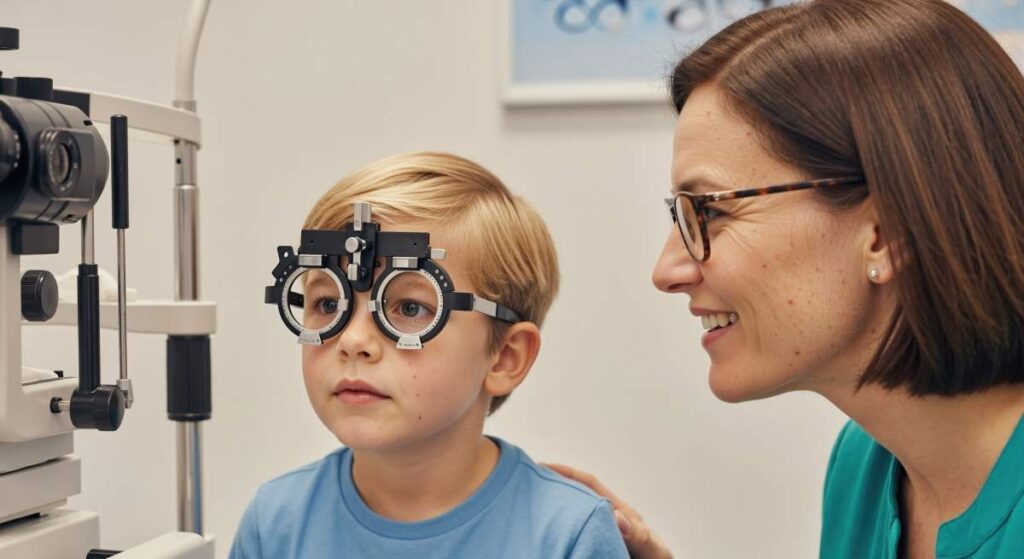
In Rapid City, SD, parents may first notice a child struggling with classroom work, outdoor glare, sports, or reading before the child says anything is wrong. Children often adapt to blurry or uneven vision, so changes in behavior can be more revealing than a direct complaint.
Glasses may help a child see clearly, support normal visual development, correct eye alignment, or protect the stronger eye when one eye sees poorly. The only reliable way to determine whether glasses are needed is through an age-appropriate vision evaluation.
What are the common signs that a child may need glasses?
A child may need a vision check if several of these signs occur repeatedly:
- Squinting to see the television, classroom board, books, or distant objects
- Sitting unusually close to screens or holding books very near the face
- Covering or closing one eye while reading or looking far away
- Tilting the head, turning the face, or using an unusual angle to see
- Frequently rubbing the eyes or blinking excessively
- Complaining of headaches, especially after reading or schoolwork
- Losing place while reading, skipping words, or avoiding close-up tasks
- Reporting blurry, doubled, or fluctuating vision
- Struggling to catch a ball, judge distances, or recognize people from across a room
- Having difficulty copying from a board or keeping up with visual assignments
- Showing a sudden decline in school performance or becoming unusually frustrated with homework
A single behavior does not prove that glasses are necessary. Children may squint because of bright light, rub their eyes because of allergies, or sit close to a screen out of habit. A pattern that continues across settings deserves attention.
Can a child need glasses without complaining?
Yes. Many children do not realize that their vision is blurry because they have never experienced anything different. A child may see well with one eye while the other eye remains weak, making the problem difficult to notice at home.
Conditions such as amblyopia, commonly called lazy eye, can develop when one eye sends a consistently weaker or blurrier image to the brain. The stronger eye may compensate, while the weaker eye does not develop normal visual sharpness. Early detection matters because some vision problems become harder to correct as the visual system matures.
Routine vision screening helps identify children who may need further evaluation even when no symptoms are obvious. Screenings can occur during well-child visits, at school, or through other community health settings. A screening is not the same as a complete eye examination, but it can identify children who should be evaluated more closely.
What does eye misalignment have to do with glasses?
Eyes that turn inward, outward, upward, or downward should be evaluated, particularly if the misalignment occurs regularly or is new. A child may also tilt the head or close one eye to avoid double vision.
In some cases, glasses can improve alignment by changing how the eyes focus. In other cases, eye misalignment may require additional treatment. It should not be assumed that a child will simply outgrow persistent crossing or drifting of an eye.
For infants, failure to track moving objects after the early months, an unusual appearance in the pupil, or eyes that do not work together should be discussed promptly with a child’s doctor.
How do school and seasonal conditions reveal vision problems?
School demands can expose a problem that is less noticeable at home. Reading small print, copying from a board, using digital learning tools, and shifting focus between near and far objects all require coordinated vision.
A child who avoids reading, becomes restless during written work, or frequently asks for instructions to be repeated may be having trouble seeing rather than refusing to cooperate. Teachers may notice that a student misses information on the board, loses place while reading, or performs better when material is enlarged.
In the local high-plains environment, bright winter snow, strong sunlight, wind, and dry indoor air can also make visual discomfort more noticeable. These conditions may cause temporary irritation or light sensitivity, but they do not explain persistent blur, double vision, or difficulty seeing at school. Seasonal allergies can cause rubbing and watery eyes, yet recurring symptoms should not automatically be dismissed as allergies.
Does a failed vision screening mean a child definitely needs glasses?
No. A failed screening means that the child should receive further evaluation. The result may reflect nearsightedness, farsightedness, astigmatism, unequal vision between the eyes, difficulty paying attention during the test, or another eye condition.
A comprehensive examination measures how clearly each eye sees and how the eyes focus and work together. For younger children, testing does not always require reading letters. Pictures, symbols, instruments, and other age-appropriate methods can be used.
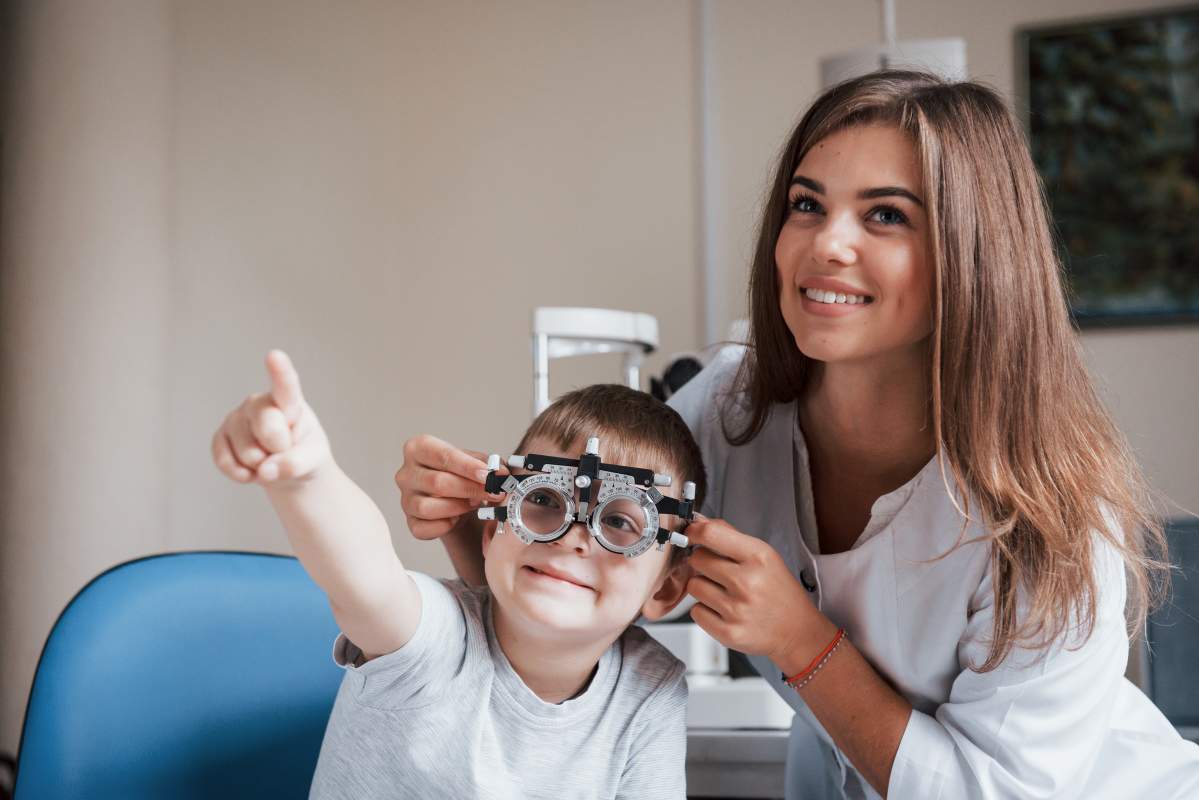
Some children have a small amount of farsightedness that is normal for their age and does not require glasses. Others may need glasses even if they do not report symptoms. The prescription depends on the child’s age, visual development, eye alignment, examination findings, and daily needs.
What is the difference between an optician and an eye doctor?
An optician makes, fits, adjusts, and helps maintain eyeglasses based on a prescription. An optician can also identify practical concerns such as a loose frame, poor fit, damaged lenses, or discomfort from the glasses.
An optometrist or ophthalmologist performs the examination needed to diagnose refractive errors and other eye conditions. If a child has not had a proper evaluation, the prescription should come from an appropriate eye-care clinician rather than from an informal visual test or an adult’s reading glasses.
Children should not be given another person’s glasses. Even when the lenses seem to improve clarity, they may not provide the correct strength for each eye or address unequal vision and alignment.
When should a child be evaluated urgently?
Seek prompt medical attention for a child with:
- A sudden change in vision
- Eye pain, significant redness, or an injury
- New double vision
- A pupil that appears white or gray
- A drooping eyelid that develops suddenly
- Persistent eye movement or fluttering
- Severe light sensitivity, swelling, or discharge
- A new or sudden eye turn
A routine evaluation is also appropriate when concerns continue, a child fails a screening, or a teacher reports repeated difficulty seeing classroom material. Children who already wear glasses may need reassessment if they frequently remove them, report blur, develop headaches, or have outgrown the frame.
How can parents observe vision at home?
Parents can pay attention to how a child functions rather than trying to diagnose the problem. Notice whether the child recognizes familiar people from a distance, follows moving objects, uses both eyes together, and manages reading or homework without unusual strain.
For an older child, covering one eye at a time can sometimes reveal a difference between the eyes, but this is not a substitute for screening or an eye examination. Avoid repeatedly testing a child in a way that creates anxiety.
A useful record includes when the behavior occurs, whether it affects near or distant tasks, whether it happens in bright light, and whether teachers have noticed similar difficulties. This information can help the examining clinician understand the concern and decide what testing is needed.